A while back
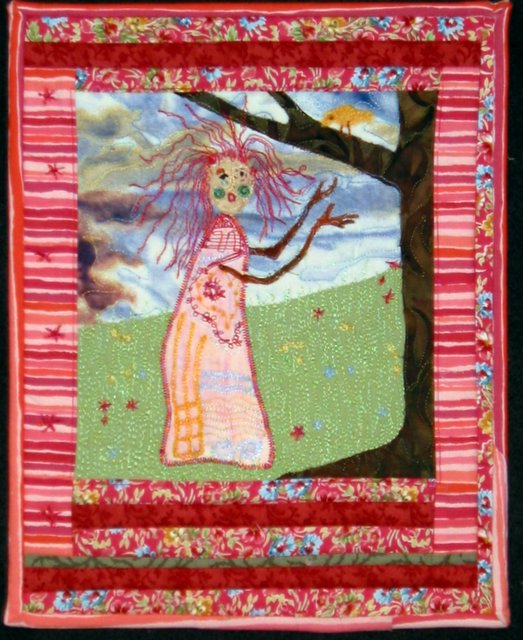
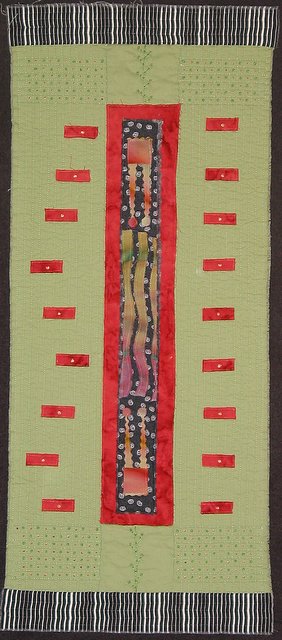
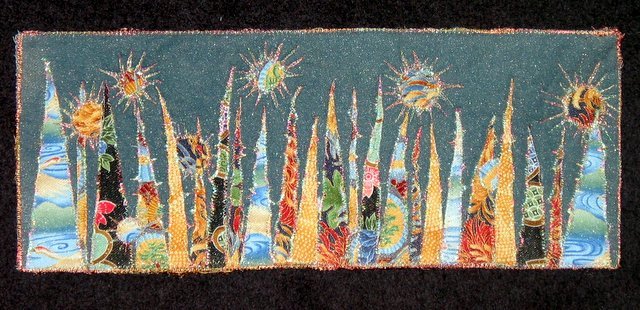
Sarah Ann Smith used lines from N. Scott Momaday's poem "Earth and I Gave You Turquoise" as the basis for a beautiful quilt. I've finally gotten around to cleaning out the filing cabinet where I knew I had a copy of the poem (could not find a copy on the internet, and Sarah only had the first few lines). I copied the poem from a tape about creativity by Gabrielle Rico (thank goodness I wrote that on my notes).
To Write Is To Know by Gabrielle Rico is an edited recording of a workshop and is excellent. The tape was from the library, but now I'm tempted to order it, as I review the 5 single-spaced pages of notes and quotes I made at the time.
Earth and I Gave You TurquoiseEarth and I gave you turquoisewhen you walked singingWe lived living in my houseand told old storiesYou grew ill when the owl criedWe will meet on black MountainI will bring corn for plantingand we will make fireChildren will come to your breastYou will heal my heartI speak your name many timesthe wild cane remembers youMy young brother's house is filledI go there to singWe have not spoken of you but our songs are sadWhen Moon woman goes to youI will follow her white wayRemember, my version is from something I
heard, not read. Any errors in structure, etc. are mine.
Here are some of my favorite quotes that Rico used to reinforce her talk:
from Dance to the Piper by Martha Graham"...There's a vitality, energy, a
quickening
translated through you into action. And because there is only one of you in all time, this expression is unique, and if you block it, it will never exist through any other medium and will be lost. The world will not have it. It is not your business to determine how good it is now, how valuable, nor how it compares with other expressions. It is your business to keep it yours, clearly and directly. To keep the channels open. You do not even have to believe in yourself or your work. You have to keep open and aware directly to the urges that motivate you. Keep the channels open."
Ray Bradbury on improvisation: "In quickness is truth. The faster you blurt, the more swiftly you write--the more honest you are. In hesitation is thought. In delay comes the effort for a style, instead of leaping on truth--which is the only style worth tiger-trapping."
and also from Bradbury: "Read poetry every day of your life. Poetry is good because if flexes muscles you don't often use enough. Poetry expands the senses and keeps them in prime condition. It keeps you aware of your nose, your eye, your ear, your tongue, your hand, and above all, poetry is compacted metaphor and simile. Ideas lie everywhere through the poetry books, yet how rarely have I heard teachers recommending them for browsing."
I've tossed pounds and pounds of paper, but rescued tons of odd poems that I read and copied from various books that were not in my many anthologies. Old friends that will help "[flex] muscles [I] don't often use enough."

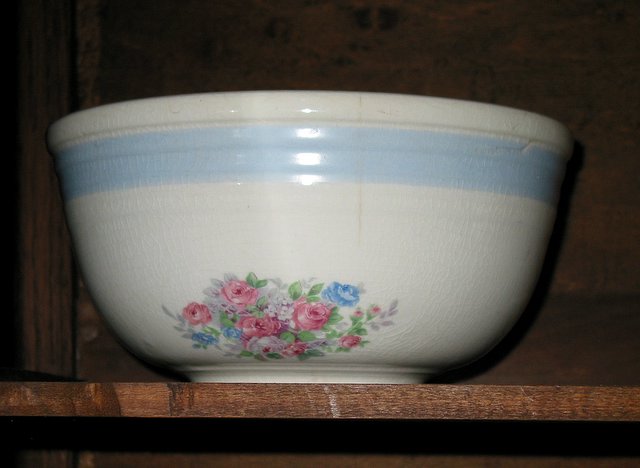
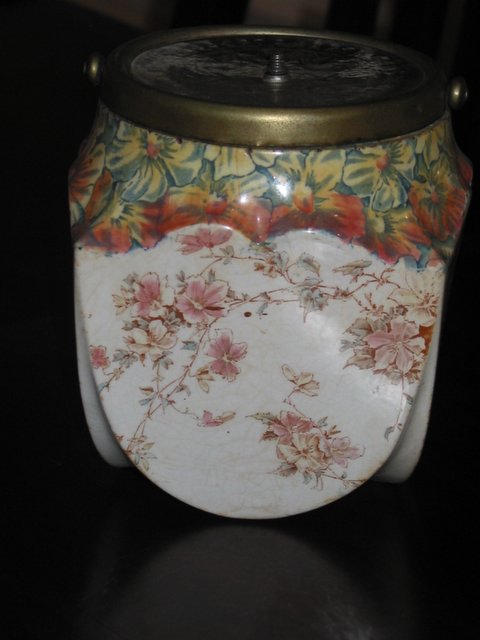 This is a biscuit keeper or small cookied jar that I bought a couple of years ago because it is so beautiful. Look at the detail on the lid.